BIO/CV
Grounded in community-based and embodied practices understood as collective, affective, and ritual experiences, her work engages with the histories of making and craftsmanship, emphasizing the transmission of knowledge through traditions, trades, and intertwined oral histories. She cultivates interdisciplinary collaborations across art, literature, music, architecture, science, and labor, fostering dialogue between seemingly disparate fields to reveal hidden or forgotten epistemologies.
A central aspect of her practice is the juxtaposition of ancestral techniques with contemporary technologies, investigating their intersections, frictions, and transformative potential. Her work highlights how the tools of the past persist, adapt, and are reconfigured within new contexts, creating speculative bridges between material traditions and emerging forms of creation. In this way, her projects function as spaces of both preservation and reinvention, challenging linear notions of progress and singular historical narratives.
Through processes of hybridization and contrast, she questions dominant structures of
knowledge and power, embracing multiplicity and movement while intertwining traditions within ever-evolving cultural landscapes. Her installations, performances, and research-based projects often take shape as complex, interwoven, assembled, and sonified systems that foreground sound, language, and materiality as central elements in the construction of meaning and collective memory.
Candiani’s work is part of major international collections, including: TATE Collection, United Kingdom; SFMOMA, San Francisco, USA; LACMA Collection, Los Angeles, USA; Kadist Foundation, USA; Pérez Art Museum, Miami, USA; Museum of Contemporary Art, La Jolla, USA; San Diego Museum of Art, San Diego, USA; MOLAA – Museum of Latin American Art, Los Angeles, USA; MUAC – Museo Universitario de Arte Contemporáneo, Mexico City, Mexico; Museo de Arte Moderno de Medellín, Medellín, Colombia; among others.
She represented Mexico at the 56th Venice Biennale. She has been awarded the Guggenheim Fellowship, the Smithsonian Artist Research Fellowship, and the Arts at CERN program. She was part of Mexico’s National System of Art Creators. She has produced commissioned projects for biennials such as the Helsinki Biennial (2025); PAAD – Public Art Abu Dhabi Biennial (2024); XI Bienal de Lanzarote (2023); 23rd Biennale of Sydney (2022); 15th Bienal de Cuenca (2021) and 11th Bienal de Cuenca (2011); XIII Bienal de La Habana (2019); and the 4th Kochi- Muziris Biennale (2018), among others.
PUBLICATIONS
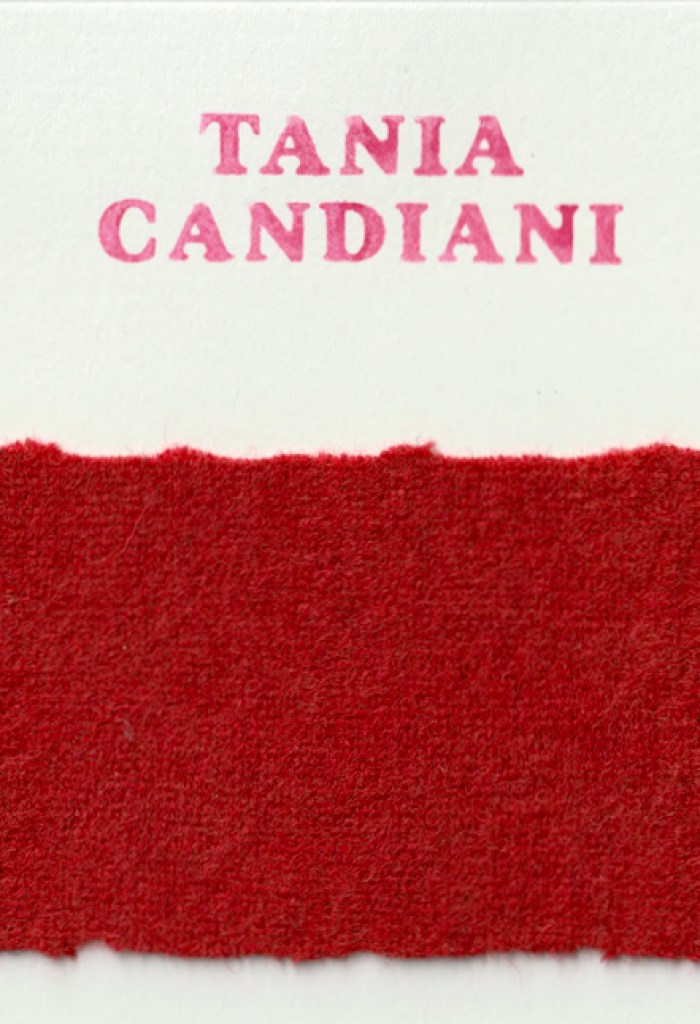
Catalog of the individual exhibition by Tania Candiani Los ojos bajo la sombra, held within the framework of the XI Lanzarote Biennial, which starts from the production of the grana cochineal and its historical relationship with the Canary Islands. The title comes from a text from the beginning of the 20th century that narrates the work of Canarian women workers in the fields and the value of this raw material at the time. Called in the Nahuatl language nocheztli (blood of tunas). The literal presence of the pigment in this piece and in the catalogue, evoke commercial exchange since colonial times and the dispossession of the territory.
With texts by Virginia Roy and Adonay Bermúdez
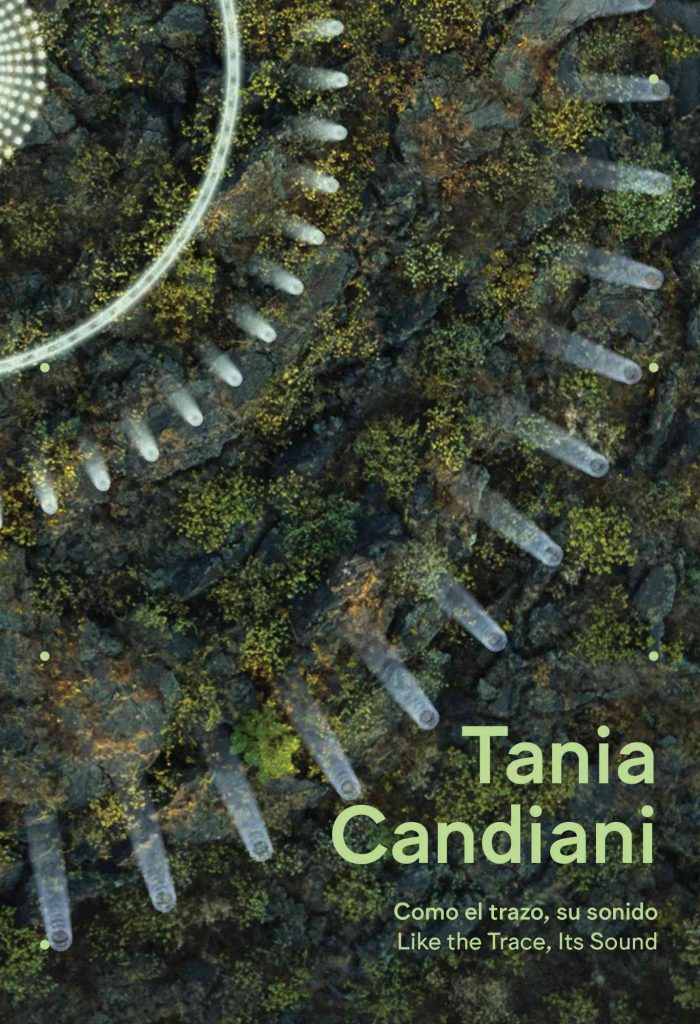
The catalog of the exhibition Tania Candiani. Like the trace, it sound, curated by Virginia Roy, presents a selection of her recent works that underscore how Tania Candiani operates from the complex intersection of phonic, graphic, linguistic, symbolic, and technological language systems. Her production has shaped an intense network of codifications and discursive and material associations between art, literature, history, science, architecture, nature, music and sound; and she proposes an expanded notion of the idea of translation as a process and as a transdisciplinary tool to decode information in diverse narratives and materialities.
With texts by Virginia Roy, Cuauhtémoc Medina, Brandon LaBelle and Jessica Berlanga.
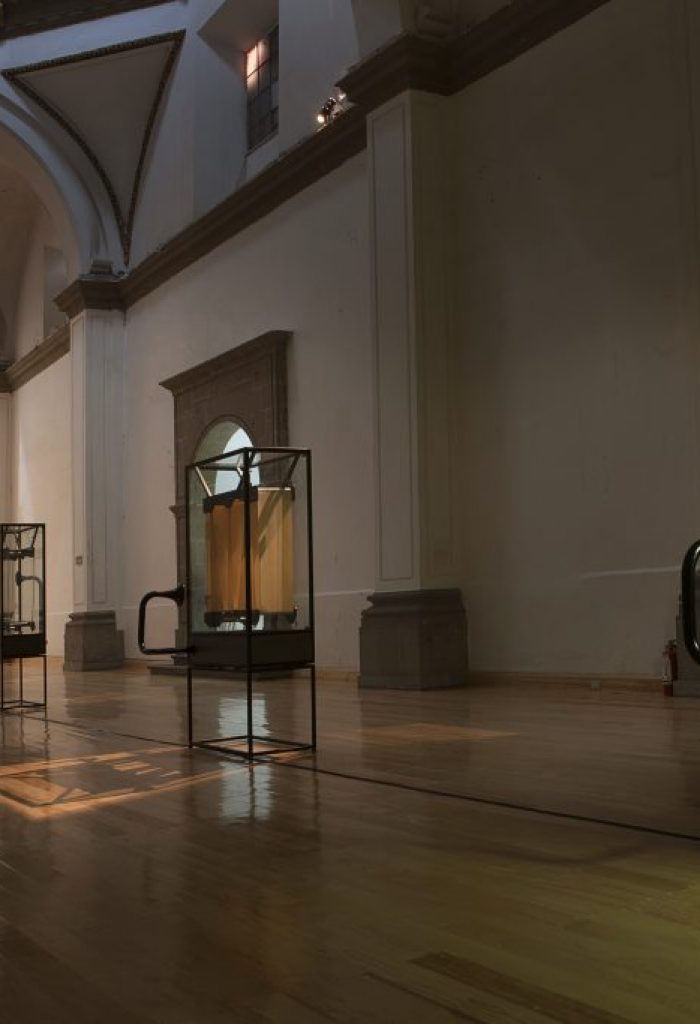
Five Variations of Phonic Circumstances and a Pause is an exhibition focused on processes and artifacts that promote phonic circumstances, elevated these, towards intensities of linguistics, sonority and spelling. The phonetic quality is exposed to “variations” that can be understood as acts of mediation associated with specific instruments and technologies. With essays by Karla Jasso, Tania Aedo, Jorge Reynoso Pohlenz, Pedro Soler and Manuel de Landa, and a conversation between Candiani and Jasso.
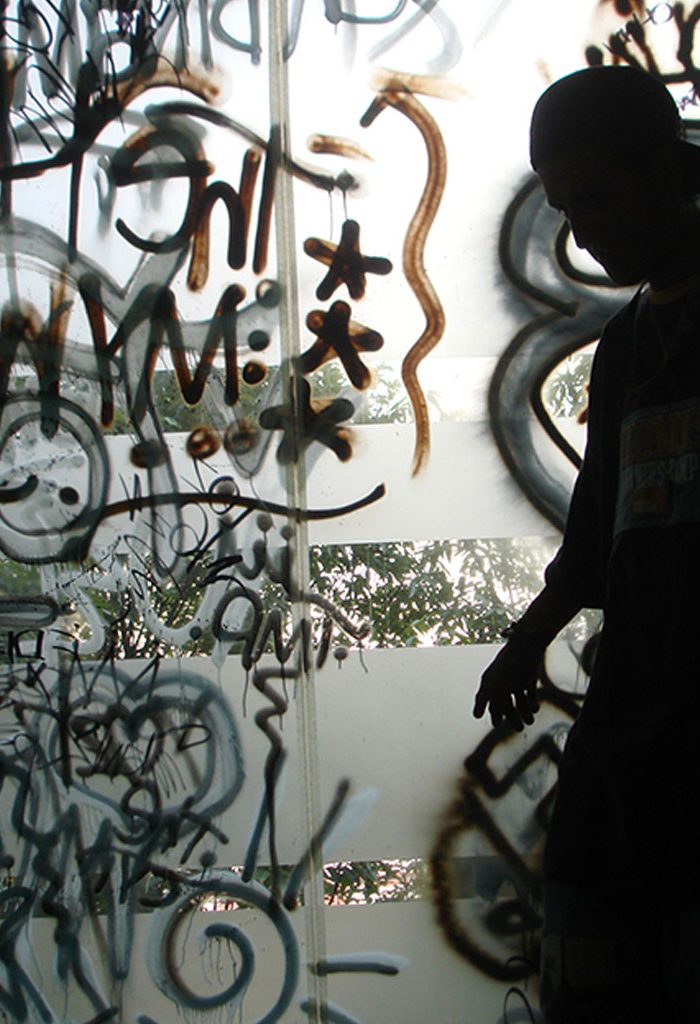
Habita Intervenido was a temporary occupation of the facade of the Hotel Habita that had much of conquest, of territorial invasion. The action itself, graffiti and tagging, as well as the image that is produced, are the starting points to reflect on the chameleonic condition of the city, the architecture itself, the contradictions of the urban image and the possibilities of the public
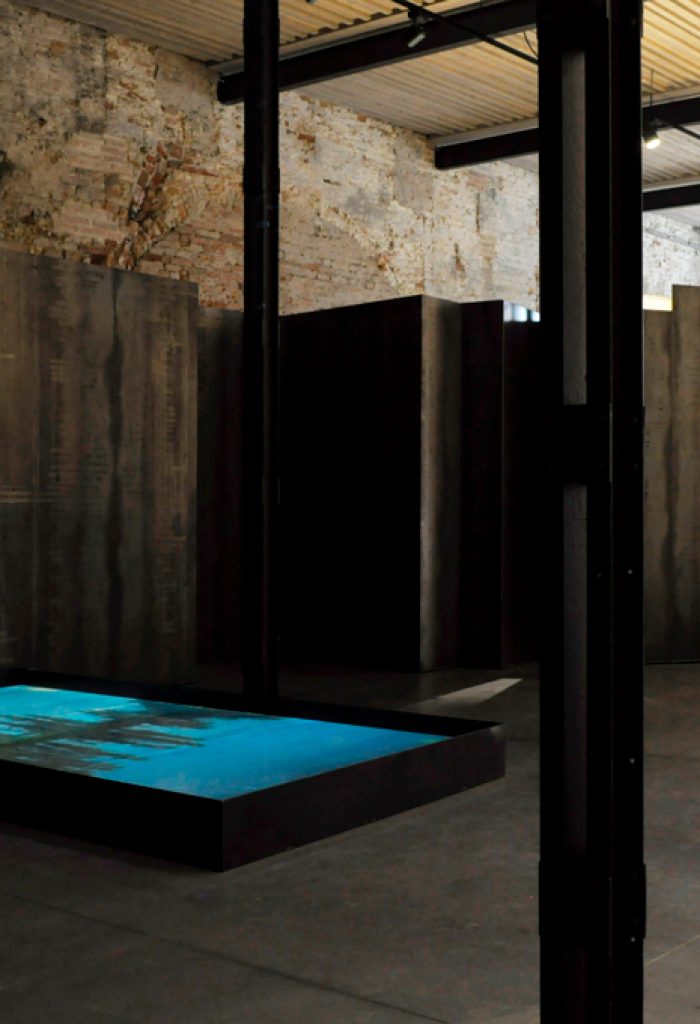
Possessing Nature is a setting where the viewer is invited to take a journey through the historical drifts of modernity; due to those drifts whose beginning, if it has one, should be placed at the point where nature appears as an object that can be appropriated by man and where technique becomes the medium and mode of production from which work and life are alienated. life.

Red page books tell stories of trees seen in the dark, short lives, and other hidden stories. Red bites into a strawberry. Now imagine falling from the branches of a tree, as in that old story? The fruit is the consolation before an end. Reddened meat asks a lot of questions. Too hot? Too much pressure and effort? Too much fury when touching the other meat?