
Coro de vozes não humanas II
Data Sheet
Credits
Curators
DETALLES DEL PROYECTO
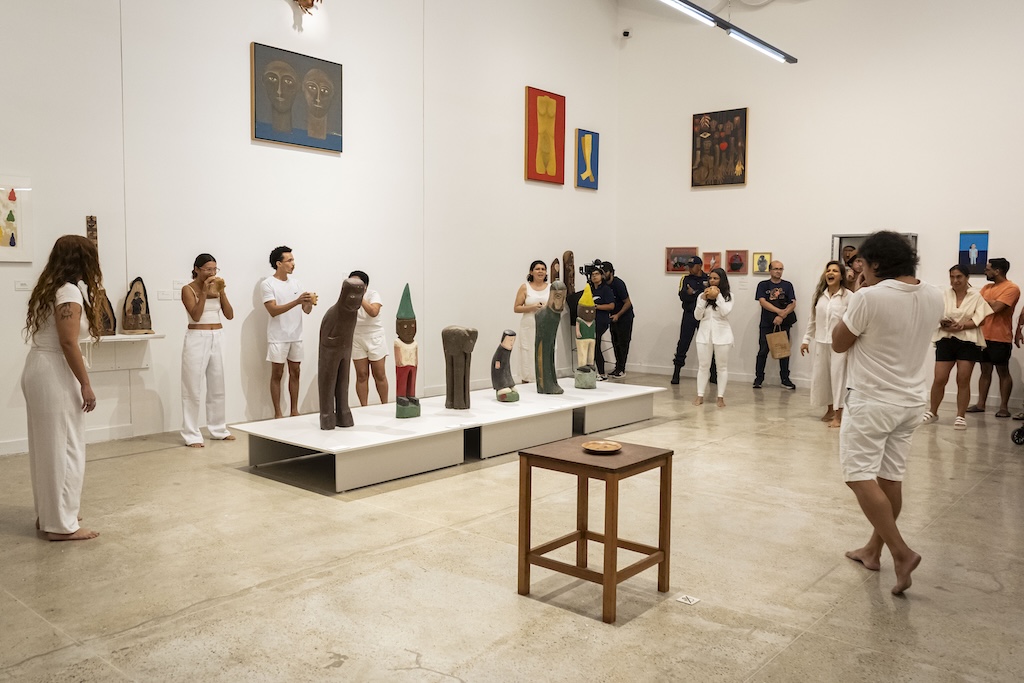
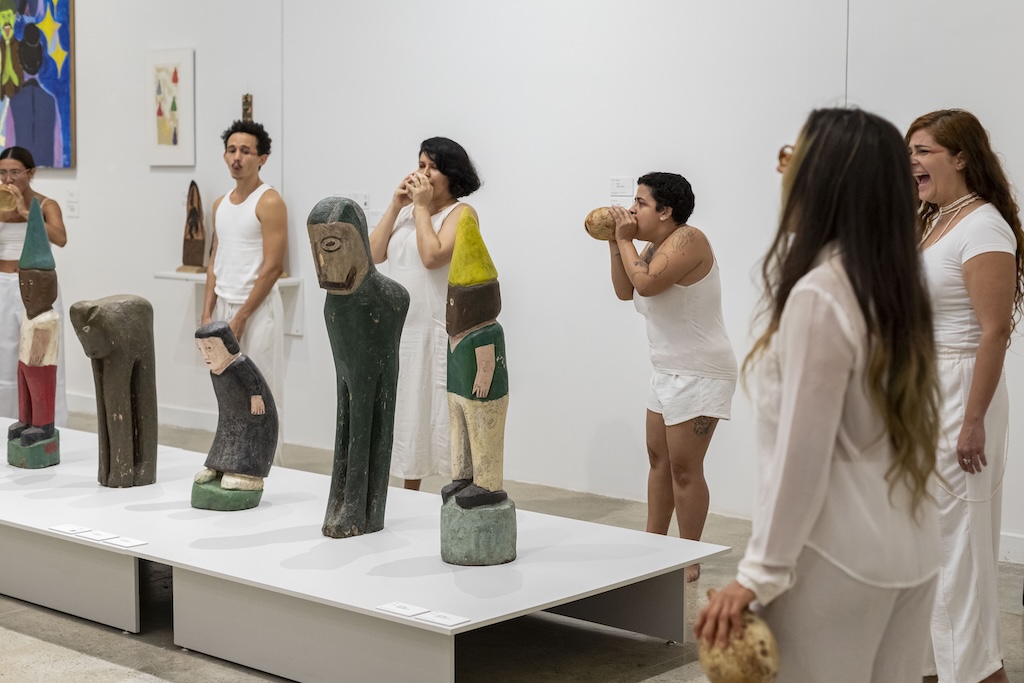
Choir of Non-Human Voices II is a new performative proposal that builds on a previous action conceived by Tania Candiani in 2023 for the 17th edition of the VERBO Performance Festival at Galeria Vermelho in São Paulo, Brazil. In this performance, a women’s chorus interpreted non-linguistic vocalizations produced by non-human females—growls, trills, chirps, hums, or howls—associated with behaviors such as alertness, territorial defense, begging, or mating. Human voices were used as a vehicle to explore resonance across species, drawing emotional and symbolic parallels between animal sound patterns and feminist collective expression.
Rather than attempting to humanize the animal world, the piece investigates the innate strength, urgency, and expressive power of non-human female voices. As in other works by Candiani, this project expands the concept of translation, pushing the human voice to its limits by engaging with sounds that do not belong to its own species.
This second iteration, performed at the Pinacoteca do Ceará on September 11, 12, and 13, 2025, focuses exclusively on vocalizations produced by non-human females from species endemic to or residing in Brazil. It proposes a choral action in which each participant interprets one or more animal vocalizations selected from verified scientific sources. The goal is to reproduce, as faithfully as possible, the tone, rhythm, emotional weight, and communicative intent of the original call. Some audio files include environmental noise or human voices that are not to be reproduced.
The sound selection was based on vocal behaviors typically associated with females in the animal kingdom: warning signals, group cohesion, caregiving, territorial defense, and social bonding. In most species, these behaviors are primarily vocalized by females due to their reproductive and social roles.
One of the challenges in this process was that many sound archives do not specify the sex of the vocalizing animal. For this reason, all recordings were cross-referenced with peer-reviewed scientific literature and bioacoustic studies to reliably identify both the behavioral context and the sex of the emitter.
A remarkable case is Callicebus nigrifrons (black-fronted titi monkey), which represents a rare and well-documented example of direct paternal vocal communication. The male emits soft contact calls toward his offspring while carrying and caring for them. This behavior, exceptionally rare among mammals, has been recorded through field studies of this monogamous species of Neotropical primates.


DETALLES DEL PROYECTO
DETALLES DEL PROYECTO
DETALLES DEL PROYECTO
DETALLES DEL PROYECTO
DETALLES DEL PROYECTO
DETALLES DEL PROYECTO